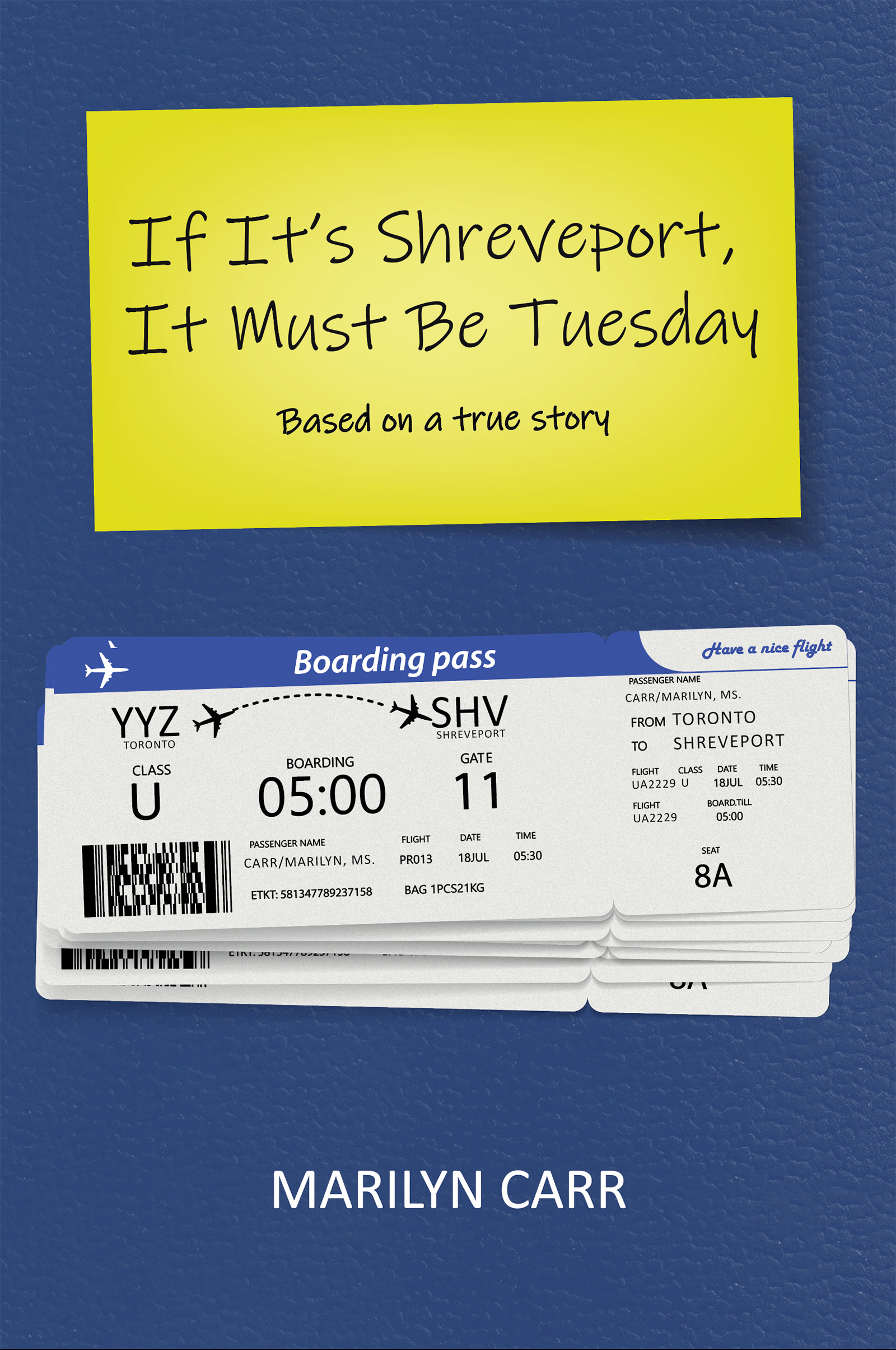
If It’s Shreveport, It Must Be Tuesday
It’s 2001 and technology startups are melting down faster than the polar ice caps, including the telecom company where Marilyn Carr had been employed for barely four months. With an eye-watering mortgage on her fixer-upper house in downtown Toronto, unemployment was not an option.
But Lady Luck dropped a lucrative consulting contract in her lap. All-expenses-paid travel across the United States, interviewing fascinating business leaders and writing compelling success stories. And U.S. dollars in the bank.
What she didn’t bank on was the culture shock. The country next door was like another planet. Even the USA Today weather map dissolved into a fuzzy void above the 49th parallel.
Join our heroine as she becomes a road warrior in a foreign land, and channels her inner Mary Tyler Moore: making it on her own.
Reviews
I’ll admit that the reason I looked at this book is because the title reminds me of an old 60s movie – “If It’s Tuesday, This Must Be Belgium.” I’ve mentioned before that I like to occasionally see an outsider’s view of the US and here, Carr provides it as she crisscrosses the country, often ending up in smaller, less visited (or at least less mentioned) cities and states.
We begin with a run-down of why Canadian Carr needs a job so much. It’s summer of 2001 and the tech start-up she’s barely worked at has now tanked, her phone calls to all her friends and contacts turn up nothing, she’s got an expensive mortgage to pay by herself, her house’s antique HVAC system is kaput and needs updating, and she’s got a cat to feed. Then, hooray, one contact calls her back but the job sounds boring. Still – see the list of why she needs money.
I frankly don’t understand what she’s doing as I don’t have an MBA but she can do this and it pays $2500 dollars (US) for each company she visits. Carr is not a seasoned traveler as well as someone who hasn’t driven in decades, when she starts but over the course of visiting (often Tristate!) locations (which usually means vanishingly small regional airports and budget airlines or in the case of the [harrowing] trip from RMMA to Denver, a Cessna) she gets her feet under her. Driving lessons in Toronto with Fred get her from white knuckled, ten kilometers below the speed limit to (sorta) being able to manage an interstate tunnel in Pittsburgh. There’s also crossing and recrossing the border while making sure the US border agents don’t think she’s being paid in the US.
The whole time I was reading it, I kept thinking of how easy it is to do stuff like this now with Zoom and indeed, late in the book Carr has to make use of something similar to that to round off the interviews she misses at a Disney World conference due to an attack of norovirus.
The joy of this book is the subtle humor and watching Carr deal with culture shock and go from baby travel steps to managing the inevitable screw-ups and hiccups of flying to places she’s never been and then navigating to often miniscule business locations such as the (then) tiny bungalow headquarters of Sketchers. She gets her interview done, ponders whether or not to take the free swag she’s offered (yes, she can take it but in the case of the sausages from Pittsburgh, it’s better to dump it in the airport ladies room than try and sneak it past the beagle on duty at Pearson International Airport). Carr also amasses a fridge door full of fun magnets from the locations she visits. Ricky the cat is not impressed though. He wants his tuna now. B+
~Jayne
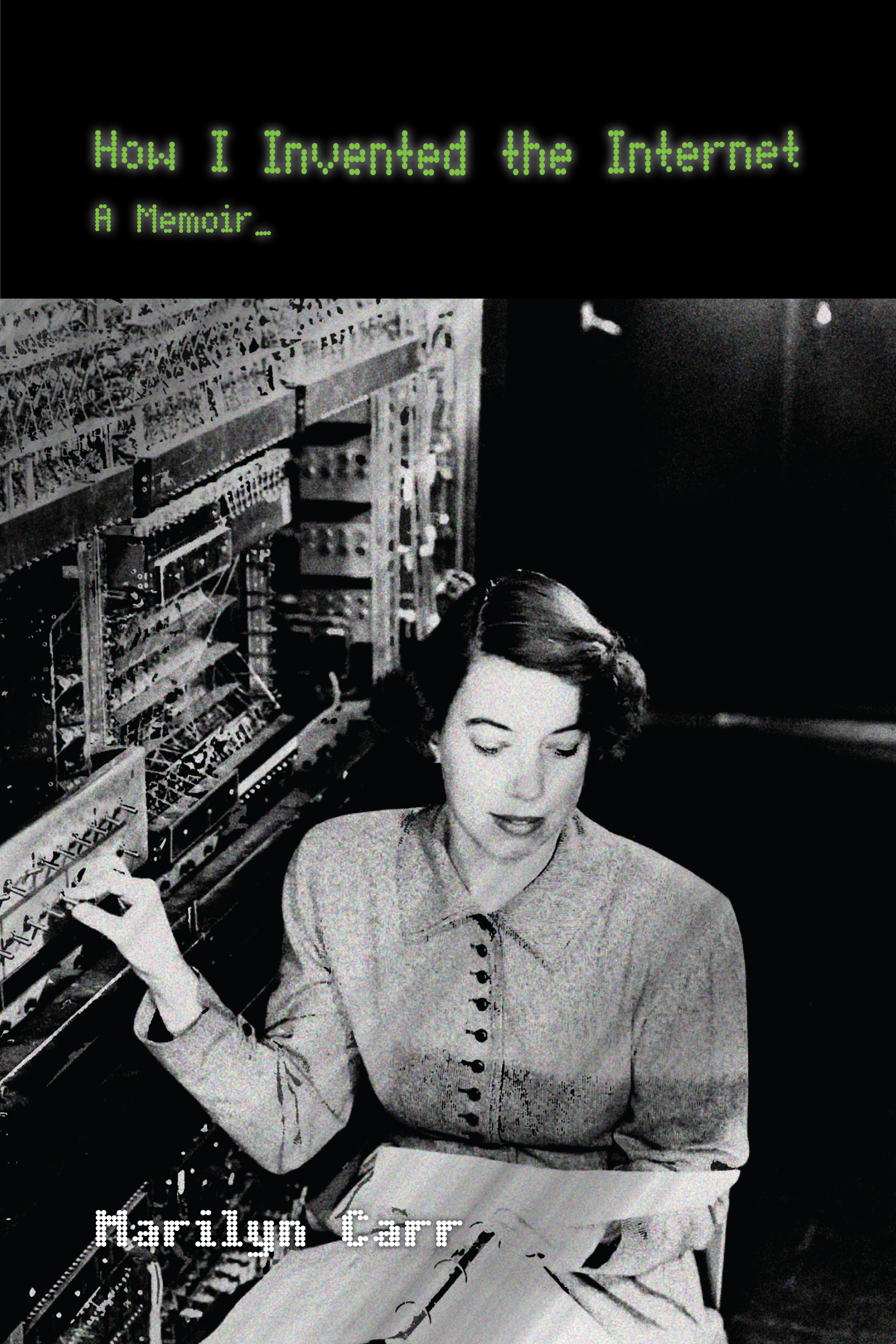
How I Invented the Internet
Published: September 30, 2022 Publisher: Iguana Books .
Despite growing up in Deep River, Ontario, the company town for Chalk River Nuclear Laboratories that only exists because of science, Marilyn Carr was firmly neither a science, technology, engineering, nor mathematics person. When How I Invented the Internet begins, she has just wrapped up a master’s degree in library science, which at least involved the word “science.” So how did she accidentally end up in a tech career? It’s complicated.
How I Invented the Internet is a coming-of-work-age memoir set in 1980s and ’90s Toronto. Along the way, our heroine muddles through a series of baffling jobs, patronizes questionable social venues, cobbles together a dating life with more downs than ups, and makes dubious housing choices. It’s a romp through the era of aspirational yuppies, outrageous shoulder pads, and the wonders of office automation. You will never look at your computer the same way again.
Reviews
“How I Invented the Internet picks up where Nowhere Like This Place left off, following Marilyn Carr as a newly minted library sciences graduate sprung from the confines of the scientifically-cultured-yet-culturally-cloistered town of Deep River and relocated to the Yuppiedom of Toronto in the 1980s. The tongue-in-cheek title belies the author’s deft ability to convey her experience of the bourgeoning influence of automation on the corporate world of the era, when both women and computers were rarities. Carr makes the terrain of working woman circa 1980s seem appealing and disheartening in equal measure as she recounts navigating mostly-male workplaces, stalker ex-boyfriends, and home-invading vermin with fly-by-the-seat-of-her-pants gumption and ingenuity. I can’t wait for the third instalment to discover what happens after the internet is invented!”
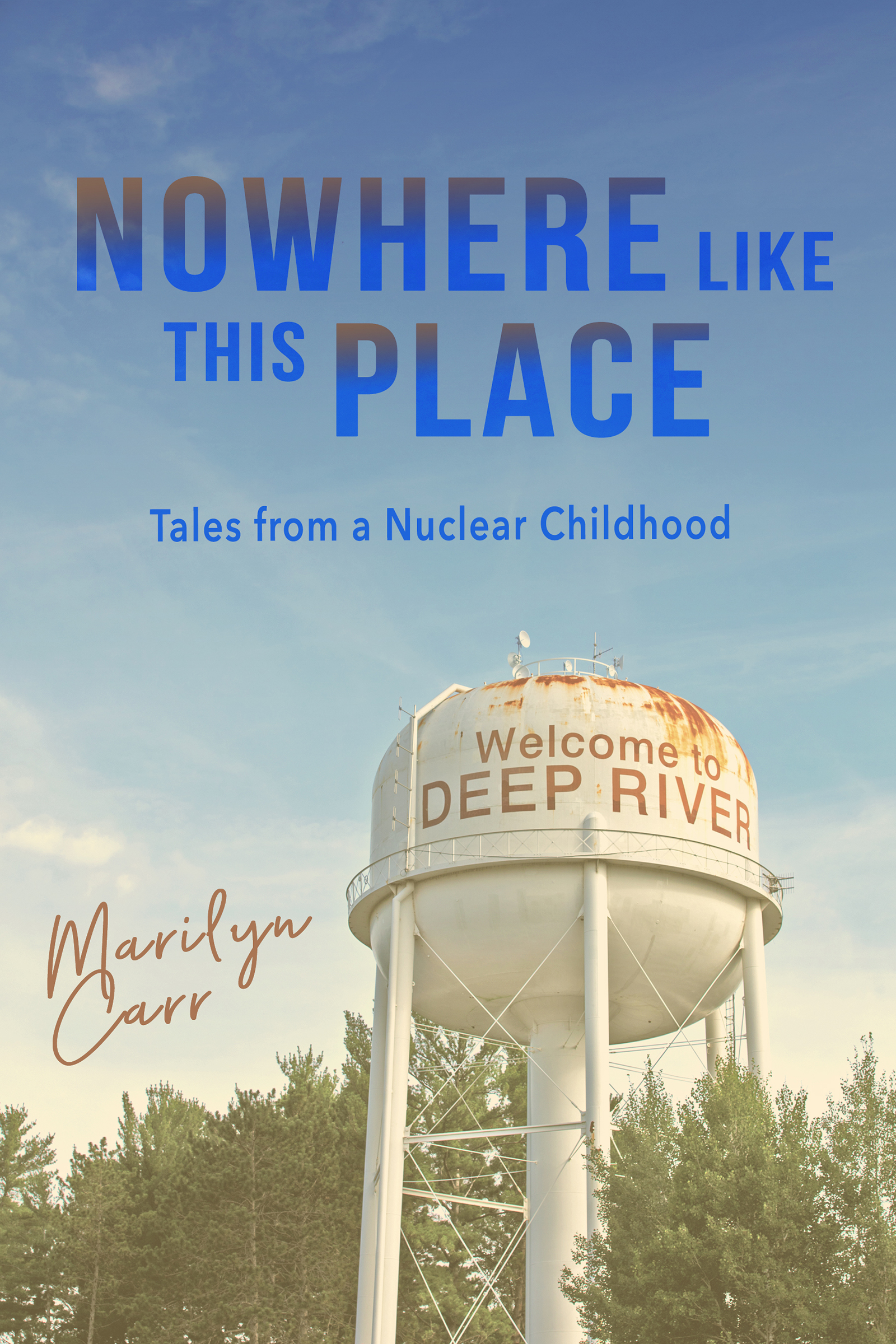
Nowhere Like This Place
Published: November 3, 2020 Publisher: Iguana Books .
Marilyn Carr’s family arrived in Deep River, Ontario in 1960 because her dad got a job at a mysterious place called “the plant.” The quirky, isolated, residence for the employees of Chalk River Nuclear Laboratories was impeccably designed by a guy named John Bland. It’s a test-tube baby of a town that sprang, fully formed, from the bush north of Algonquin Park, on the shore of the Ottawa river. Everything has already been decided, including the colours of the houses, inside and out. What could possibly go wrong? Nowhere like This Place is a coming-of-age memoir set against the backdrop of the weirdness of an enclave with more PhDs per capita than anywhere else on earth. It’s steeped in thinly veiled sexism and the searing angst of an artsy child trapped in a terrarium full of white-bread nuclear scientists and their nuclear families. Everything happens, and nothing happens, and it all works out in the end. Maybe.
Reviews
“The judges were impressed with the grace and quality of your writing, and remarked as well on your ability to convey humour on the page, comparing it favourably to Terry Fallis.”
“What do you get when you transplant a young girl from Quebec into what could arguably be called the most unique community in all of Canada in the 1960s and watch her grow up there? You get the makings of a very funny and perspective book.”
“A coming-of-age book like no other. How could life be normal in a town that wasn’t? Carr manages to make you feel like you are there with her, wending her way through a ‘manufactured’ town, where much like Alice in Wonderland, nothing is quite as it seems. Carr’s comfort with words is obvious as she helps us laugh along with her descriptions of a childhood and adolescence that we can all relate to. A funny and thoroughly enjoyable read.”